Thinking about straightening your smile but worried you’ve missed your window? You haven’t. Adults make up a growing share of orthodontic patients, and whether it’s ever too late for braces is a question Dr. Sherri Weissman hears all the time. Whether you’re 25 or 65, your teeth can still move, your bite can still improve and your confidence can still get a serious lift.
Let’s walk through what adult treatment really looks like today, from the options available to the small daily habits that keep your results looking sharp for decades. There’s a lot of outdated information floating around about adult orthodontics, and clearing it up is the first step toward a smile you’ll love.
What Are Adult Braces and Why the Age Myth No Longer Applies
Adult braces are orthodontic treatments designed for patients 18 and older, using Invisalign, modern metal braces, LightForce clear braces or champagne braces to correct crowding, spacing and bite issues. Healthy teeth can be moved at any age, which is why more adults than ever are choosing treatment.
The old idea that braces are “just for kids” simply hasn’t aged well. Adults choose treatment for all kinds of reasons: a wedding, a career change, lingering shifting after childhood braces or finally doing something they put off for decades.
Dr. Weissman builds adult treatment around your real life, starting with discreet options that don’t draw attention. You’re one of the family now, no matter when you start.
How Adult Orthodontic Treatment Works: From Consultation to Confident Smile
Adult orthodontic treatment typically follows a clear five-step process: a free consult with digital imaging, a custom treatment plan, fitting of your chosen appliance, regular check-ins and a retainer phase. Treatment length depends on how much movement your teeth need, and every case is different.
Here’s what to expect:
- Free consult and digital smile scan. You’ll meet Dr. Weissman, discuss your goals and get a digital scan of your teeth. No pressure, no obligation.
- Custom treatment plan. Dr. Weissman reviews your scan, maps out your tooth movement and walks you through your options with a clear timeline.
- Fitting day. If you chose braces, we bond them in a single visit. If you chose Invisalign, you’ll leave with your first few sets of aligners and simple instructions.
- Regular check-ins. You’ll visit every 4 to 8 weeks for adjustments or new aligner sets. These visits are quick, usually 15 to 30 minutes.
- Retainer phase. Once your teeth are in their new positions, you’ll wear a retainer to keep them there. This step is what protects your results for life.
Dr. Weissman is an experienced orthodontist, so you’re in capable hands from your first visit through your retainer check.
Benefits of Getting Braces as an Adult
The payoff for adult treatment goes well beyond a prettier smile. Many adult patients say the health and lifestyle benefits surprised them most.
How Do Straight Teeth Improve Oral Health?
Straight teeth are easier to brush and floss, which lowers your risk of decay and gum disease over time. When teeth overlap or crowd together, plaque hides in places even careful brushing can miss. Correcting crowding and spacing gives your toothbrush and floss a clear path, which can pay off in fewer cavities, healthier gums and stronger long-term oral health.
What Lifestyle Benefits Do Adults Notice After Treatment?
Here’s what you can look forward to:
- A confidence boost. People who feel good about their smile tend to smile more often, and that shows up everywhere from job interviews to first dates to family photos.
- Improved bite function. Correcting an overbite, underbite or crossbite can help with uneven tooth wear and how your teeth come together when you chew.
- Discreet options for professionals. Invisalign and LightForce clear braces fit right into boardrooms, courtrooms and classrooms without drawing attention.
One of our favorite things to hear from adult patients: “I wish I’d done this sooner.” Dr. Weissman hears it often. The honest answer is that the best time to start was years ago, and the second best time is now.
Adult Braces Options at Weissman Orthodontics
Adults have more choices than ever, and the right one depends on your case, your lifestyle and your preferences. Here’s a quick look at the main options available.
| Option | Visibility | Best For |
|---|---|---|
| Invisalign | Nearly invisible | Mild to moderate cases, professionals, removable preference |
| Modern Metal Braces | Most visible | Complex cases and patients who want a proven, reliable option |
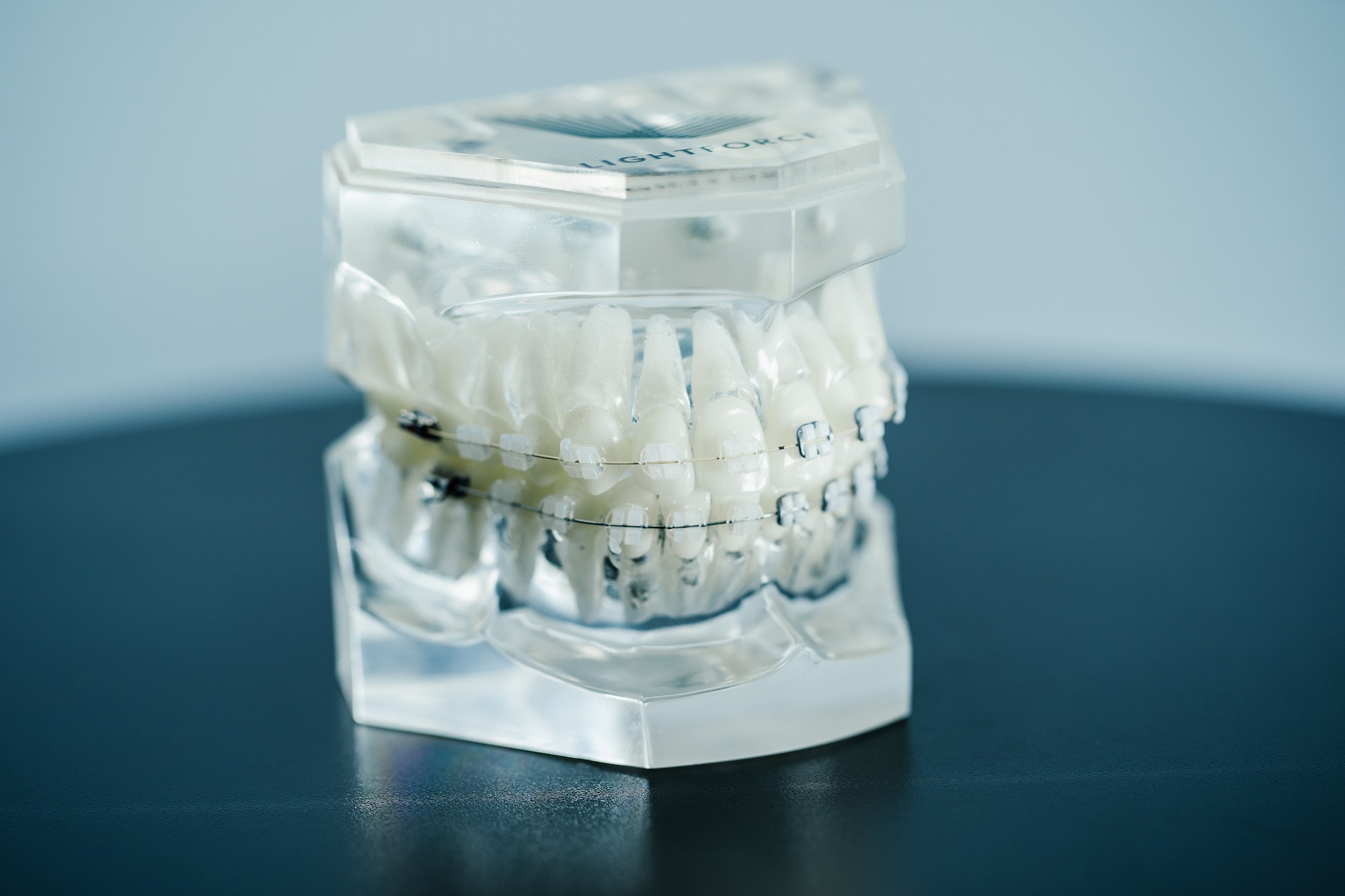
| LightForce Clear Braces | Discreet, tooth-colored | Adults wanting fixed treatment with low visibility |
| Champagne Braces | Subtle metallic tone | Patients who want something warmer than silver metal |
Invisalign clear aligners are removable, so you eat and brush normally. Weissman Orthodontics is a Diamond+ Invisalign provider, which means serious experience with everything from simple spacing to full-mouth correction.
Modern metal braces are still the workhorse of orthodontics. They’re efficient, reliable and often the go-to choice for complex cases.
LightForce clear braces are custom 3D-printed to fit each tooth exactly. The result is a lower-profile bracket that moves teeth more efficiently than old-style ceramic options.
Champagne braces offer a soft, warm metallic color that blends with natural tooth tones better than silver.
Not sure which one fits? Our guide to choosing between braces or Invisalign goes deeper, and your free consult will settle it.
Are You a Good Candidate for Adult Braces?
Most healthy adults are candidates for orthodontic treatment. The main requirement is healthy teeth and gums, since teeth move best in a healthy mouth. Beyond that, Dr. Weissman can address most alignment and bite concerns.
You’re likely a strong candidate if:
- Your teeth and gums are healthy (any active gum disease should be treated first)
- You have crowding, spacing, overbite, underbite, crossbite or open bite
- Your teeth shifted after childhood braces (relapse is very common and very fixable)
- You have crowns, veneers, bridges or implants (we plan treatment around them)
- You’re ready to commit to good oral hygiene and wearing aligners or retainers as directed
- You want to improve how your smile looks, feels or functions
The only way to know for sure is a free consult. Dr. Sherri Weissman will examine your bite, review your medical and dental history and give you an honest recommendation. If braces aren’t right for you right now, she’ll tell you.
Frequently Asked Questions About Adult Braces
Am I too old for braces?
No. Adults in their 30s, 40s, 50s and well beyond successfully complete orthodontic treatment every day. As long as your teeth and gums are healthy, your age is not a barrier. Dr. Weissman has helped Birmingham neighbors of all ages renew their smiles over many years of practice.
How long do adult braces take?
It depends on how much movement your teeth need, and every case is different. Simple spacing or minor crowding can often wrap up in under a year with Invisalign, while more complex bite corrections often take longer. Dr. Weissman will give you a specific timeline at your consult.
Do adult braces hurt?
Expect mild soreness for a few days after your initial fitting and after each adjustment or new aligner set. Over-the-counter relief and soft foods usually handle it comfortably. Many patients find modern options like Invisalign and LightForce more comfortable than the braces they remember.
Will braces affect my work or speech?
Minimally. Clear options like Invisalign and LightForce are discreet enough that most coworkers won’t notice. With aligners, you may have a slight lisp for the first few days as your tongue adjusts, but it fades quickly. Metal and champagne braces are more visible but still don’t interfere with professional life.
Can I eat normally with adult braces?
With Invisalign, yes. You remove your aligners to eat and drink anything you want. With modern metal braces, LightForce or champagne braces, you’ll avoid hard, sticky and crunchy foods that could damage brackets or wires. Most patients get used to it within a week or so.
What happens after treatment ends?
You’ll move into the retainer phase. Retainers hold your teeth in their new positions and prevent shifting. Your retainer routine usually shifts from more wear to nighttime wear over time, and Dr. Weissman will walk you through exactly what yours looks like.
What daily habits protect my results long term?
Consistent brushing twice a day, daily flossing and regular cleanings keep both your teeth and your retainer in great shape. Treat your retainer with care: clean it, store it in its case when it’s not in your mouth and replace it if it warps or cracks. Small habits now translate into decades of straight, healthy smiles later.
Age is not the gatekeeper people assume it to be. If you’ve been thinking about renewing your smile, know that the door is still wide open. Adult orthodontics has become quieter and more flexible than ever before, and the right time to learn more is whenever you’re ready. Your smile is unique to you, and we want it to be your favorite thing about you.